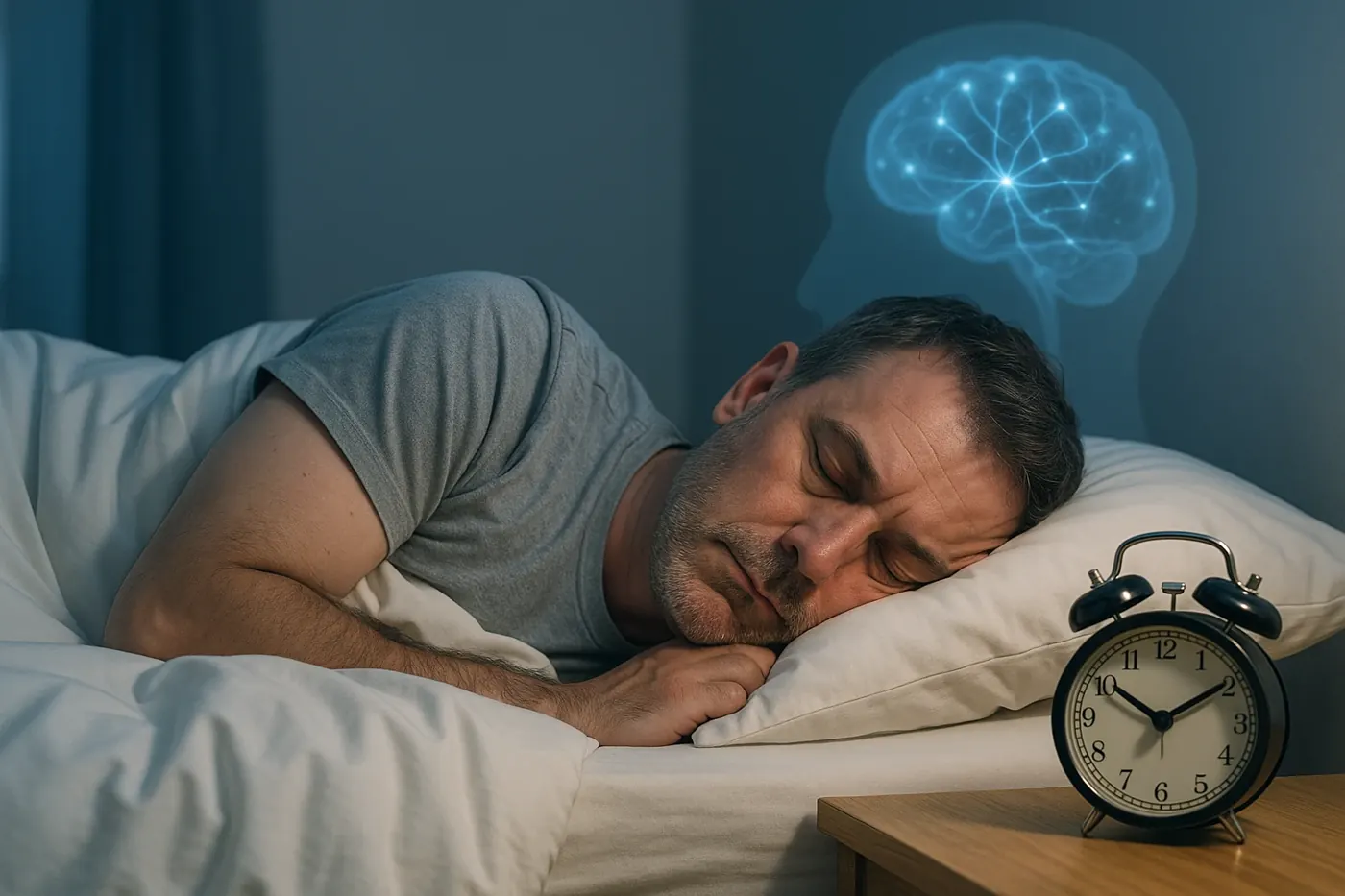
New research from Penn State reveals why your sleep type matters more than you think
A major new study from Penn State University, funded by the National Institute on Ageing, has delivered one of the clearest pictures yet of how our long-term sleep habits shape our risk for chronic disease. Using data from the nationally representative MIDUS (Midlife in the United States) study, researchers tracked adults over ten years and identified four distinct sleep phenotypes:
Good Sleepers
Weekend Catch-up Sleepers
Insomnia Sleepers
Nappers
What they found was striking… and in some cases, worrying.
Two of the most common groups, Insomnia Sleepers and Nappers, were consistently linked with significantly higher risks of chronic conditions including cardiovascular disease, diabetes, cancer, depression and frailty.
📄 Peer-reviewed source:
Lee S, Smith CE, Wallace ML, et al. 10-Year Stability of an Insomnia Sleeper Phenotype and Its Association With Chronic Conditions. Psychosomatic Medicine, 2024. https://pubmed.ncbi.nlm.nih.gov/38436651/
This research highlights something essential:
Your long-term sleep pattern is one of the most powerful and predictive markers of your future health.
🛌 Four sleep types, four very different health futures
⭐
1. Good Sleepers
Stable, restorative sleep at both timepoints. This group served as the reference category for all comparisons.
⭐
2. Weekend Catch-up Sleepers
People who sleep less on weekdays but compensate at weekends.
Good news: This pattern was not associated with an increased burden of chronic conditions in adjusted models.
⭐
3. Insomnia Sleepers
Individuals reporting difficulty falling or staying asleep at one or both timepoints.
Here the risks were substantial:
Being an Insomnia Sleeper at either timepoint was linked with a 28–81 percent higher number of chronic conditions at T2 (after adjusting for T1 health).
Being an Insomnia Sleeper at both timepoints was associated with 72–188 percent higher risk of cardiovascular disease, diabetes, depression and frailty.
⭐
4. Nappers
People who regularly nap during the day.
This group showed increased risks for diabetes, cancer and frailty, even when baseline health was accounted for.
🔄 Sleep patterns tend to stick
One of the most important findings was the stability of these sleep types.
More than three-quarters of people remained in the same sleep phenotype over 10 years.
This means sleep behaviour is far more ingrained than many of us think.
Changing sleep is possible, but it requires:
Structured interventions
Persistent habit-building
Supportive environments
Addressing socioeconomic barriers
🧩 The role of social and economic factors
The study also revealed important demographic patterns:
Individuals with lower education or unemployment were significantly more likely to be Insomnia Sleepers.
Older adults and retirees were more likely to be Nappers.
This reinforces the idea that sleep is not just a biological process, but also a social one.
Policies, workplace practices, stress exposure and household environments all shape how we sleep.
🧠 Why this matters for healthy ageing
This research underscores the powerful link between sleep and long-term health. At Essentio, we talk often about the compounding effect of micro-habits. Sleep may be the best example:
Small, consistent behaviours repeated daily influence the trajectory of your biological and psychological ageing.
With sleep so closely tied to chronic disease risk, resilience and mood, understanding your sleep phenotype is a first step toward changing it.
⭐ Key takeaways
There are four distinct sleep phenotypes, each with unique health trajectories
Insomnia Sleepers and Nappers face substantially higher chronic disease risks
Public health efforts need to prioritise sleep education and access to better sleep environments
🌙 A simple message for everyday life
Sleep isn’t just nightly downtime.
It is a physiological investment strategy, with compounded returns over decades.
Prioritising sleep hygiene, protecting your routine, and understanding your personal sleep pattern are some of the most powerful tools you have to protect your long-term health.
Here’s to deeper rest, healthier ageing and a brighter future. 🌙✨
I was speaking with a senior leader recently who said, almost in passing, “I just assume from here it’s about slowing down and managing the slide.” There was no drama in it… just…
New research shows that variability in HRV during sleep reflects behaviour consistency. Learn why stable routines drive sustainable high performance for…
Why simplifying your health strategy leads to better performance. Evidence-based insights on subtraction, behaviour change, and sustainable leadership…